Showing posts with label Week 3.. Show all posts

Thursday, February 13, 2020

Unity Tutorial 03.

So today, I've decided to continue on in the Driver's simulation series and the how-to-use VRTK series so I could improve my knowledge of Unity. I've also discovered a new series also on Plane Programming that also taught me quite a bit.

↝ For the "Step into the Driver's Seat" (https://learn.unity.com/tutorial/lesson-1-4-use-user-input-to-control-the-vehicle?courseId=5cf96c41edbc2a2ca6e8810f&projectId=5caccdfbedbc2a3cef0efe63#5cbe3969edbc2a191e639150), I've learned some more coding on creating player controls and making the vehicle rotate instead of sliding. The Plane Programming tutorials allowed me to mess around with a brand new Assets pack titled "Challenge 1 starter files" and as the tutorials went on, they allowed me to get more familiar with the new tools. I've also been able to have the plane move forward, slow it down, have the plane tilt only to the user's controls, moved the camera from the front to the side of the plane, have the camera follow the plane also, and finally, making the propeller spin as part of a bonus step.

↝ As for the VR snap zones and user interfaces (https://learn.unity.com/tutorial/snap-zones?projectId=5cdc9e4cedbc2a1ef423426c), I've learned about transitioning and scaling certain objects and creating meshes. I did struggle with these steps as the terminology and coding were a little too advanced for me. I did, however, find creating a clipboard with instructions and messing with the typography on google fonts quite enjoyable. 

This image was found on pexels.com

Wednesday, February 12, 2020

Reading 3.

Since the continuation of my studies on managing complexities and avoiding dominant strategies, I've developed a fair bit of knowledge in relation to both of these topics, through online articles and searching through google's books.

↳For my first topic on managing complexities, I've figured, well first of all what actually are complexities? Complexities are constraints on economic decision-making and how the human brain works. How does this relate to gaming in any way? Well, studying the effects on these complexities can help us make our predictions more accurate when it comes to game development for future players. This can also help us recognize their behaviors towards different kinds of games, whether they are positive or negative reactions.

↳ As for my second topic, what are dominant strategies? How does one avoid such? In-game theories, a dominant strategy is an action that pays off for a specific player, regardless of what other players do.  These strategies are considered better than others and have two kinds of dominance. A strictly dominant strategy always provides a greater service to a specific player, whereas a weakly dominant strategy provides the same service to all other players, and sometimes greater for other strategies, depending on what.

This image was found on Pixabay.

Thursday, October 10, 2019

Unity Tutorial 02

I've since continued Jimmy Vegas' series in Unity (can be found here), and I now find Unity slightly more confusing with the whole scripting aspect. I am quite unfamiliar with Visual Studio, I know I'll struggle at first but hopefully I'll get the hang of it sooner than later. I do however find the "creating gems in order to collect them" quite interesting, and I may end up taking this idea and using it in my game, as I most likely will create either a stealth-type game or a sandbox-rpg game where the player can collect something a little more unique (possibly pages, bags of goods, or even hints). I'm also quite excited to be messing around with the terrain tools to be creating my own rivers/lakes/ponds, mess around with the colours around it to make it a little more realistic, and even include fences as a border around the entire map so players cannot go over the boundaries and into oblivion (or maybe they could, who knows). Unfortunately, I am quite disappointed with episode 5 of his series as I don't understand the difference between the before and afters of ray casting. I feel it was a waste of an episode, but I'm open to learning more useful techniques to use in scripting.

Into Game Design.

Sunday, October 6, 2019

Feedback thoughts

Recently I've came across two articles, one titled; "Why rejection hurts so much and what to do about it". and the other titled; "Seven Ways to Crush Self-Doubt in Creative Work". From what I have gathered from the first article, "rejections are the most common emotional wound we sustain in life", which in fact is true. Us as humans, value acceptance from others and when things don't go our way, it really brings us down, and because of these "minor rejections", it makes us become more vulnerable to become more anxious and over thinking, as opposed to being just you and taking in critiques, but unfortunately our brains are wired this way. This article covers a lot about overcoming rejection, from having zero tolerance to self-criticism, to boosting your feelings for social connection. This article really brought light onto the topic, and I feel more open to the idea of constructive criticism for others and being more kind to myself as I'm really not as perfect as I think I am.


↛  The second article has really taught me how to stop giving into self-doubt when it comes to my works. It has covered everything, from not comparing yourself to others, to being vulnerable to a trusting community and embracing your growth mindset. I will admit that I am guilty to consistently doubting my works from my photography skills to my very own YouTube channel, I am a complete perfectionist. I'll always spend more time than others on what I think is art, going down to the very nitty gritty details of things, before publishing, as one flaw will tick me off into recreating the entire thing, and unfortunately that's just my nature, but this article inn particular has brought light onto the topics. It taught me some valuable lessons on how to show my works some love, and hopefully spending less time on perfecting when really I could be getting advice from others and possibly nobody would notice the same details as I do.

Game Brainstorm.

For my first game idea, I was thinking of doing a Sandbox Role-playing video game (RPG). This kinda video game allowed players a large amount of freedom and usually contains somewhat more open free roaming, and is purely simulation driven (so the player isn't confined to a single path restricted by certain objects such as fences, rocks, walls, etc.) Instead of featuring levels and specific areas, sandbox games most likely occur in a world in which the gamer/player has full access to from start to finish. The games would include structured elements (such as tasks, specific prescribed story lines, mini games) that the player can choose to do or ignore, and because of this non-linear nature, it creates challenges for game developers (I like the idea of pushing myself to create better content anyway). Some examples of 'sandbox gaming' would include Grand Theft Auto, Terraria, Garry's Mod and The Sandbox. What I was thinking of doing, is creating this alternate world in which the player somehow wound up, where the grass is blue, the trees have glowing pink leaves and creating inter-dimensional creatures that wow the gamers (my projects and work is usually always pretty and have hidden meanings to today's world problems, I'd like to try something new and create something beautiful out of galactic species that make the viewers feel like we may not be alone in this universe.) I also plan to have interactive- characters (that possibly say a few words when being clicked on), some unique scenery and hopefully some side challenges. The character will be in first person view, and may or may not have it's own body and/or weapon in hand (like in Minecraft when one can go into first-person view). I know this will be difficult to achieve, but I am open to the idea of working harder in order to create a brilliant game that I'm proud of.
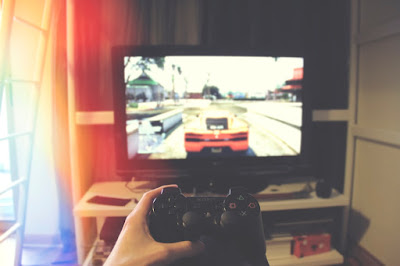
 Grand theft auto

⇉  A second game idea I had in mind was creating a stealth-type game, where the game tends to emphasize sneaking around and avoiding an enemy to avoid conflict. In stealth games, players have the option to be able to engage in loud combat, but are often punished for it, or can obtain their goal with or without stealth, but stealth is encouraged as the player is at a disadvantage over many of their enemies. An example of this would be playing "Stop it, Slender!" on Roblox, where the players have to hit 3 generators and find 8 pages before Slender-man can get to them first. The players are given a 100% battery camera (which acts as their life bar) and the ability to run (which also acts as a bar that regenerates once it's used up). Other examples include Sky rim, The Last of Us, Assassin's Creed, and Hit man. I really like the idea of "Stop it, Slender!", and rather it being a multi player game like on Roblox, it'll be a single-player one with a different goal and different creature following the player. The game featured several maps, all made from different designers, but I think for the purpose of my game I'll create a single map, preferably someplace spooky, like a forest (as it'll be a much easier map to create, I'm also open to the idea of creating the inside of a hotel as a map, or even an asylum). I might also take the idea of finding 3 generators to activate in order to be able to access the rest of the map in hopes of finding hidden objects for the player to find so they can win the game (in my case, I think I'll create different coloured keys), and might add some visual effects to the first-person view such as adding vignette, grain, and have the game in black and white.

 Black and white.

⇉  Another game idea I had in mind was a platform game, where the gamers (also known as platformers in this case) have their game play primarily centred around jumping or climbing to navigate the character's environment (they may have enemies or obstacles to avoid and fight, or may even be straight up jumping as part of a puzzle). Examples of these can include 'Obby's' (where each short level, the player has to solve by jumping through a course, just like in "Wipe out"), 'Flood Escape' (where players are put into a designated room and have to climb and jump to get to the top without drowning), and 'The floor is lava' (where players must get to a high place and avoid touching the floor as they will potentially die). Generally the player's characters is capable of jumping many times their very own height, and is sometimes offered some control over their movement mid air. Some settings tend to be somewhat exaggerated with uneven terrain so that gamers can leap to or even fall off. I also particularly like this idea, as it's nostalgic and brings back childhood memories, and also gives me the ability to create various rooms and different challenges for the players to try (this gives me the opportunity to dive deep into scripting, and learn more about gaming than other game developers). I am leaning more towards a recreation of 'Flood Escape', but with a more interesting setting, such as in a lab and its hydrochloric acid flooding the room, or potentially in an asylum and it's oozing black liquid to create a more sinister feel. I'm going to come out of my comfort zone and create a character for this game mode, rather than it being in first-person view, as I'd like to learn more about character design too.
 Flooding.

⇉  My last idea was a good ol' typical shooter game, where the main objective is to shoot (whether it's at an object or another player). Players typically use ranged weapons to partake in the fun, which take place at a distance. Most shooting games involve rather violent game play (I'm not a violent person, so this in turn would be challenging for me and way out of my comfort zone), however, there are also non-violent objectives such as what the game 'Splatoon' partakes in (most likely going to be my approach). Splatoon is a third-person shooter video game, centred around fictional characters, also known as "Inklings" (a kinda squid-like creature that transforms between human and "cephalopod" like forms). Other examples include Call of Duty, Counter-strike, Fortnite, and Destiny. I most likely won't be taking inspiration from any of these games as they are so complex and detailed, so I'll be going through a more safer route considering I am highly inexperienced in the 'shooting field'. I do like the idea of a more family-oriented approach like 'Splatoon', however I won't be making it into a multiplayer mode, rather it being a single-played mode, and create a "Mii" with scenario's from "Wii sports resort". I'll be creating tasks where the gamers would have to shoot at designated objects in a specific timeframe in order to achieve a prize. This gives me the opportunity to go more in-depth with scripting, play around with different terrain's and even alter the lighting to make it similar to 'Wii's sports resort'. I will keep it in first player view, but have the body and weaponry visible to the player, in order to make the gamer feel like they're in the actual game. I'll also mess around with the audio, and make it feel rather soothing where the player looks in one direction and hear more naturist sounds in one ear more than the other when using earphones and playing the game.

Shooting.

Wednesday, October 2, 2019

UnityTutorial 01

After viewing a few episodes of Jimmy Vegas' series in creating a game using the 'Unity' programme (can be found here), I've come to the conclusion that I've seen some of the tools and am familiar with the layout because of Roblox Studio (bare in mind this has been a while ago I've used the programme). The first two episodes, I was already familiar with the set-up, but found episode 3 rather interesting when Jimmy introduced downloading content from online and including trees, grass and gems. I was also fascinated when he began altering the colours, adding movement to the grass and bringing the trees to life, and in turn, is motivating me to do further research into creating my own game. I do however find the terminology and multiple tabs quite confusing, and I know I will soon struggle trying to find different folders and adding textures as I'll be mixing them up a lot (a common theme for even when I was creating my own games through Roblox's studio as a kid). I'm also quite the perfectionist so I know it will take me quite some time to fully understand all the tools used, and I'd want to make a more complex game than a simple "survivors"-type gameplay. I do like the idea of creating a role-play game, so I'll further do some research from other YouTubers and gathering inspiration from unique custom content.

Gaming console.

Tuesday, October 1, 2019

Game Design

After doing some research online about what a "Game" and what "Game design" really is, it got really thinking about how complex the whole industry really is. A game will always have a start to end, have various tasks to do/choices to make, own rules and goals etc. and that's only some perks (http://www.thegamesjournal.com/articles/WhatIsaGame.shtml). After reading this article, I was given a better understanding of a concept of a game, and got me to think more about the different components and criteria for a future game I plan to develop. It encouraged me to think about a better lay-out, different scenarios a player can encounter and even the rules of the game. I also got to learn about the history of games, starting from the early 1900's such as tic-tac-toe and chess, to more advanced gameplay today by the likes of "World of Warcraft".


↺ I've also done some follow-up reading in a blogpost called; "Don't Be a Vidiot; What Computer Game Designers Can Learn From Non-Electronic Games " (http://www.costik.com/vidiot.html), where I got to learn about the enormous gaming industry and it being a field for originality and creativity. For someone who's very educated in both software and games, it is a very confusing development, and there is so much one can do, from audio development, to creating your first character for players to enjoy.


↺ Lastly, I got to go in-depth in researching about game design on http://gamasutra.com/blogs/LewisPulsipher/20110516/7453/So_Youre_Going_To_Make_A_Game_For_The_Very_First_Time.php. I've never really noticed but game developers will most likely re-create their game from someone else, because it's very rare to come up with an original storyline nowadays with the endless amount of games everybody has access to. Realistically, a game developer would have to focus on the gameplay rather than the appearance because players are drawn to storylines rather than the art of the game.

Reading 8.

So I've taken a break from blogging last week to focus more on my group project, but this week I've been doing some research on cre...